Photos in. Sellable listings out.
A retro games shop needed to list stock faster than one person can type. The system that does it is running in production — aussieretrogames.com.
Visit the live shop → ▶ Explore the sandbox
Full demo deployment — storefront, admin panel and live dashboards, running on sample data.
The problem
Every second-hand game needs the same work before it can be sold: photograph it, identify the title, platform and region, find the barcode, judge the condition, write a description, set a price, then publish it. Done by hand that is minutes per item, and the minutes are the business.
It is also dull, repetitive and easy to get wrong — exactly the kind of work that should not be a person's job.
What runs now
1 · Photograph. Snap the item, drop it in the chat. That's the entire training.
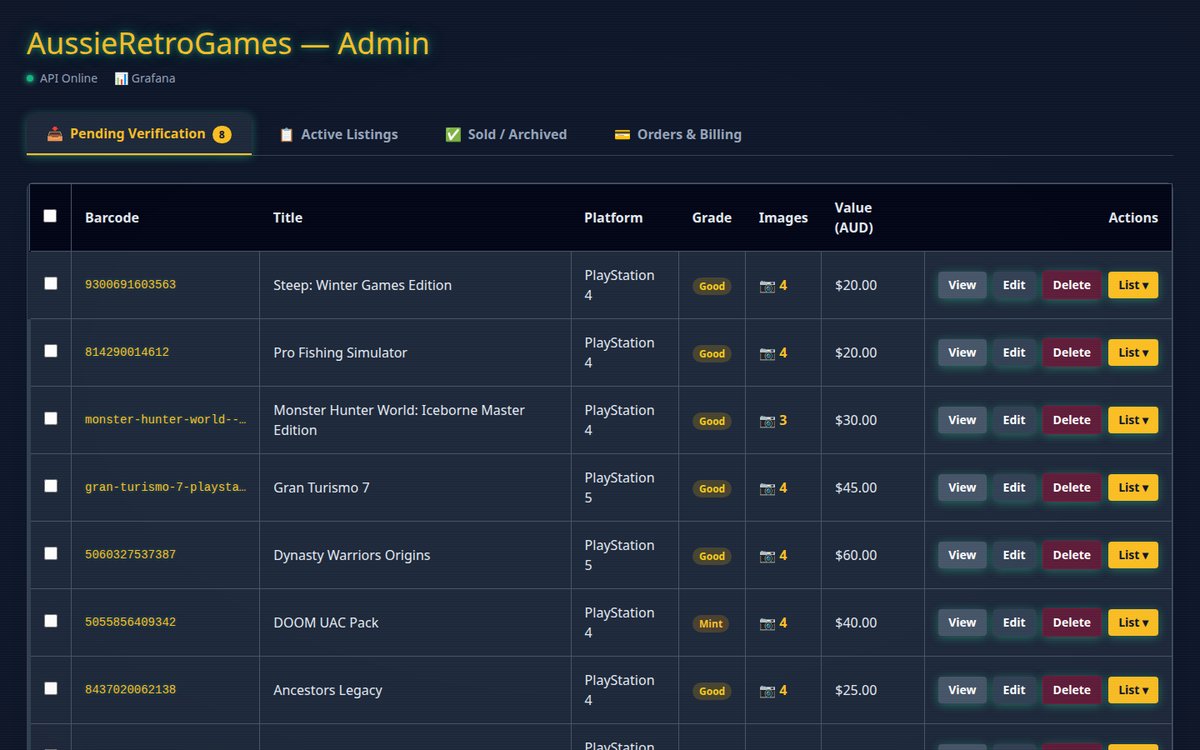
2 · Verify. Extracted details land in a review queue — approve, edit or reject.
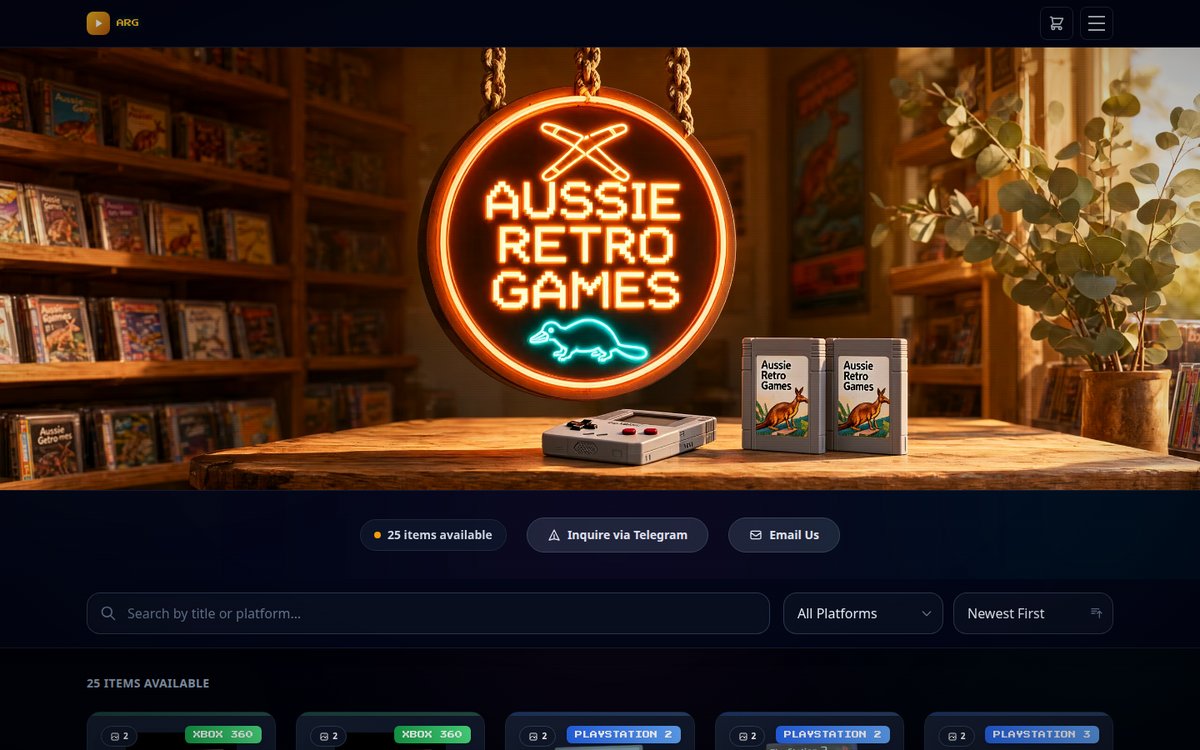
3 · Live. Approved items appear on the shop with clean cut-out images and a price.
Behind those three steps: the background is cut out automatically, AI vision reads the photos for title, platform, region, barcode, condition and item type, prices are checked against the market, and everything waits for a person before it goes public.
What stays human
- The condition call — the system proposes a grade, the person confirms it.
- The price — suggested, never auto-published.
- Every approval — nothing reaches the storefront without a click.
- Customer conversations — the shop replies, not a bot.
That split is deliberate. The automation does the typing; the shop keeps the judgement and the relationship.
What it runs on
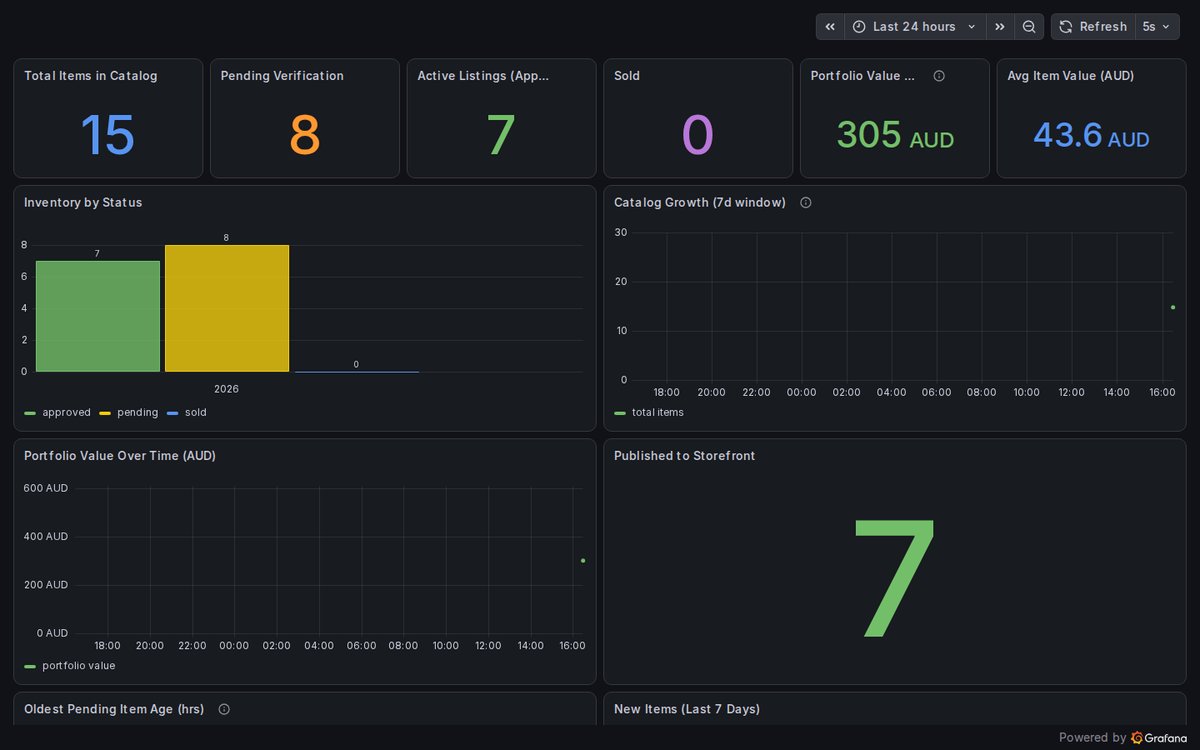
Docker on a single VPS, PostgreSQL, n8n for the workflow, an Express API, a React admin and storefront, Stripe for payments, Prometheus with Grafana dashboards for monitoring, and Cloudflare in front. The same stack, with sample data, is the demo you can click through — demo.northline.technology.
The second automation is the marketing agent. The moment an item is listed on the storefront, it writes a blurb from the listing details and asks for a yes/no in the chat app the owner already uses — Telegram, Slack, WhatsApp or email — then posts it to Instagram and Facebook. Decline it and nothing goes out. The owner has the last word on everything public.
One system, any collection.
The pipeline doesn't know what a game is. It reads a photo, grades the object, checks market price and waits for your yes. Games, cards, records, tools, furniture — same machine, different catalogue.
What this shows, and what it doesn't
The system is real: it runs in production, handling real stock. What I'm not going to do is dress it up with numbers that belong to the shop — revenue, hours saved, or a testimonial. Those are theirs to publish, not mine to borrow.
So judge it on the output instead. Open the shop, click through the sandbox, look at the quality of a listing. If that looks like something your business could sell from, the rest is a conversation about your version of it.
What you get
- An intake channel your team already uses — Telegram, WhatsApp, email, Slack or a shared folder, whichever fits how you already work
- Clean, background-removed product images for every item
- AI-graded condition and identified details, checked against live market prices
- An approval-first admin panel — you sign off before anything is published
- Hosting, monitoring, and improvements on a monthly care plan
The Catalog System starts at €5,000 + €500/month care plan. The care plan covers hosting, monitoring, improvements, and support. Larger inventories and extra integrations quoted after a short call — the base system fits most dealers as-is.
Our own tools — LLM Engine, our local-LLM Android chat app, is coming to the Play Store. We build our own AI first →